


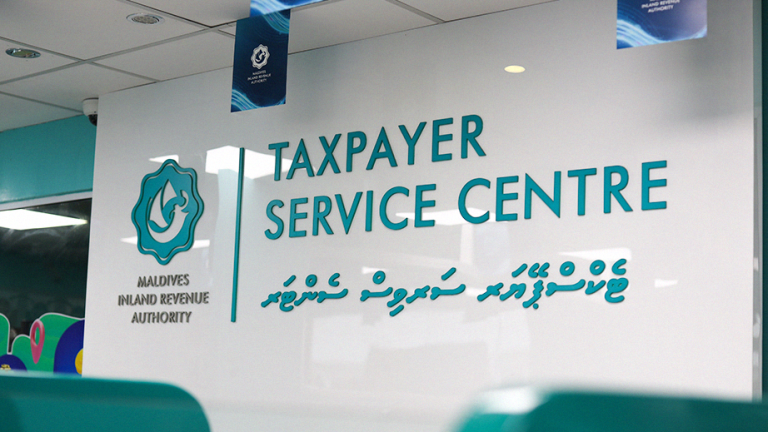
The Maldives Inland Revenue Authority (MIRA) reported that it collected USD 288.6 million in January, reflecting a significant increase compared to the same month last year.
Data released by the authority shows that revenue rose by 33.1 percent year-on-year. However, the total fell 4.9 percent short of the projected estimate for the month.
MIRA stated that the increase was mainly driven by higher collections from bank income tax, growth in land sales and land transfer fees, and improved Goods and Services Tax (GST) revenue from the tourism sector. Tourism GST (TGST) saw an increase following a 7.4 percent rise in tourist arrivals in December 2025 compared to December 2024. The submission of the second interim bank income tax return also boosted overall collections.
Despite the positive annual growth, certain revenue categories, including business income tax, tourism GST, and departure tax, did not meet expected targets.
The authority further noted that 7.6 percent of January’s total revenue comprised payments from previous outstanding deadlines. Additionally, 25.9 percent of the revenue was generated through recovery efforts, amounting to USD 34.49 million. Of this, USD 19.83 million was collected through official notices, USD 3.31 million through dues clearance, USD 0.51 million via bank account freezing, USD 6.22 million through phone reminders, and USD 4.60 million under installment arrangements.
GST remained the largest source of revenue, contributing 40.4 percent of the total with USD 116.1 million collected. Income tax followed, accounting for 34.7 percent or USD 99.9 million. Land sale and transfer fees generated USD 17.6 million, Green Tax brought in USD 14.4 million, Airport Development Fees totalled USD 12.2 million, and Departure Tax amounted to USD 11.7 million.
Overall, January’s figures indicate strong revenue performance, largely supported by tourism growth and enhanced compliance measures.
Leave a reaction